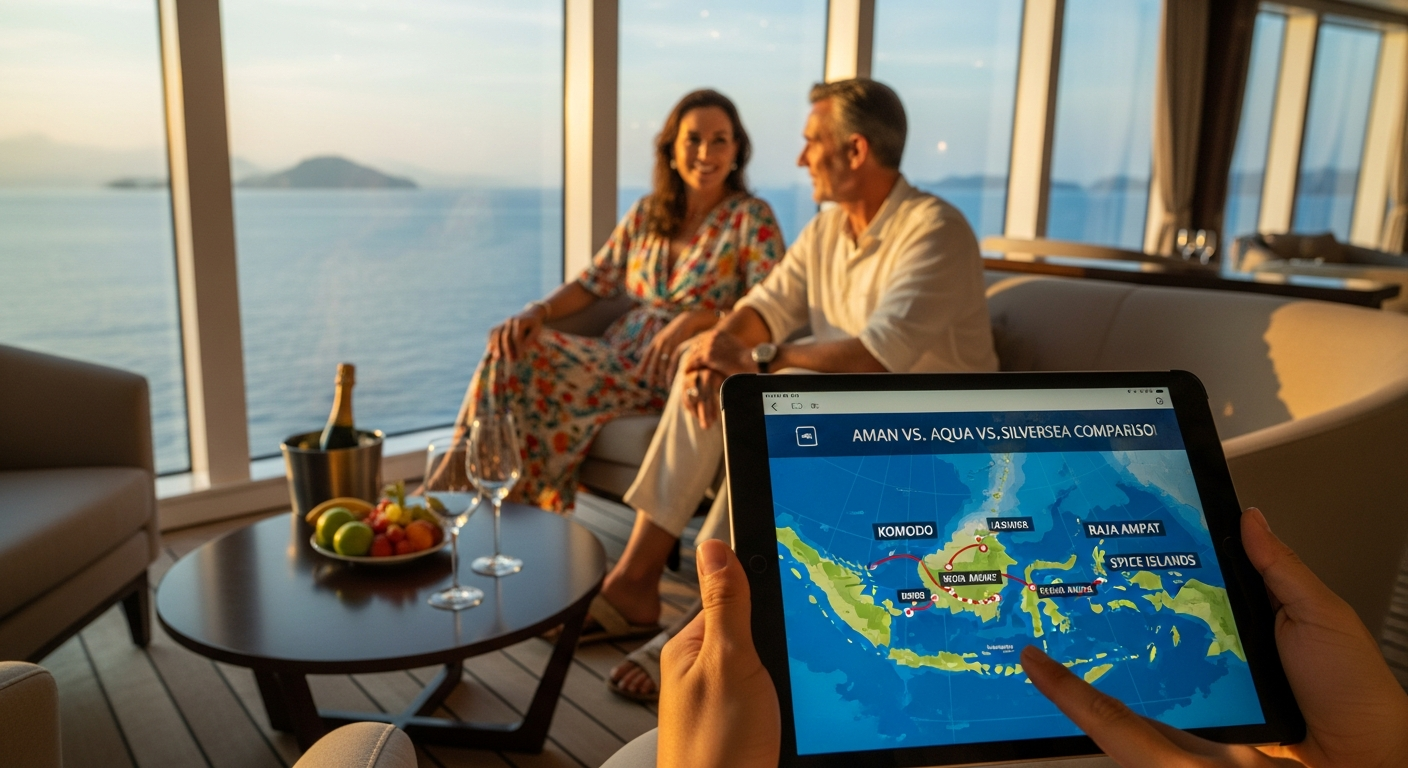
The sapphire expanse of the Indonesian archipelago shimmers, a promise of exploration. Below the surface, vibrant coral gardens teem with life; above, ancient volcanic peaks pierce the tropical air. This is the domain of the Indonesia luxury cruise, a distinct proposition for the discerning traveler.
The Phinisi Difference: Authenticity vs. Scale
When considering an Indonesia luxury cruise, the vessel itself often defines the experience. Traditional Phinisi yachts, handcrafted by Bugis and Konjo shipwrights in South Sulawesi, represent a profound cultural immersion. These two-masted wooden schooners, some built over two years, typically host 10 to 20 guests across 5 to 10 cabins, offering an intimate setting rarely found on larger ships. Their design, rooted in 18th-century maritime traditions, allows navigation into shallow coves and remote anchorages inaccessible to conventional cruise liners. For example, a vessel like the AYANA Lako di’a or the Lamima, measuring around 50 to 65 meters in length, provides a guest-to-crew ratio often approaching 1:1, ensuring highly personalized service.
In contrast, international luxury cruise lines such as Silversea Expeditions, Aqua Expeditions, or even Aman’s own vessels like Amandira, while offering exceptional comfort, often operate on a larger scale or with a more standardized expedition model. Silversea’s expedition ships, for instance, accommodate 100 to 200 guests and feature global itineraries that might include a single port call in Indonesia. This difference in scale directly impacts the level of bespoke itinerary planning and spontaneous exploration possible. A Phinisi typically spends multiple days within a specific region, such as the Komodo National Park, allowing for repeated dives, treks, and cultural exchanges, whereas a larger ship’s schedule is often more rigid, adhering to strict port times. The Phinisi offers a direct connection to Indonesian heritage, a tangible link to centuries of seafaring prowess, a depth of experience unmatched by a modern, steel-hulled vessel.
For more on Phinisi construction and history, consult Wikipedia’s entry on Pinisi.
Itinerary Exclusivity: Komodo, Raja Ampat, Banda
The primary draw of an Indonesia luxury cruise lies in its focused, in-depth itineraries through the archipelago’s most pristine and biodiverse regions. These voyages are not about checking off multiple countries, but about truly inhabiting a specific ecosystem for 7 to 14 nights. Consider a Komodo itinerary: guests spend days exploring the UNESCO World Heritage site of Komodo National Park, established in 1980. This includes multiple land excursions to see the Komodo dragons (Varanus komodoensis), snorkeling in Manta Point where manta rays with wingspans up to 7 meters are frequently sighted, and diving among vibrant coral gardens in sites like Batu Bolong. This level of sustained engagement with a single region is a hallmark.
Raja Ampat, a marine biodiversity hotspot in West Papua, offers another compelling example. With over 1,500 islands and 75% of the world’s coral species, a 10-day Raja Ampat expedition aboard an Indonesia luxury cruise provides access to remote villages, extensive diving across hundreds of named sites, and opportunities for birdwatching to spot Wilson’s Bird-of-Paradise. Larger luxury liners, due to their size and global routing, typically offer a single, brief stop in a major port like Bali, or a transit through a portion of the archipelago, limiting the depth of exploration. They cannot replicate the granular access to remote islands or the flexibility to adjust routes based on local conditions or guest preferences. The Banda Islands, historically significant for the 17th-century nutmeg trade, offer a deep dive into colonial history and spice plantation tours, a specialist itinerary offered by only a handful of dedicated Indonesia luxury cruise operators on indonesialuxurycruise.com.
Learn more about Indonesia’s diverse regions at Indonesia.Travel.
Service & Personalization: Crew-to-Guest Ratios
The hallmark of an Indonesia luxury cruise is the intensely personalized service, a direct consequence of the low guest count. With typically 10 to 20 guests served by a crew of 12 to 20, the crew-to-guest ratio often exceeds 1:1. This means individual preferences, from dietary requirements to activity choices, are not merely accommodated but anticipated. Chefs prepare bespoke menus, often incorporating fresh, locally sourced ingredients specific to the region, such as seafood caught hours before serving. Imagine a private dinner on a deserted beach, meticulously arranged by the crew, with specific wine pairings chosen from a cellar of 50+ labels.
On larger luxury liners, even those with high service standards like Regent Seven Seas or Silversea, the service model is necessarily more standardized due to the higher volume of guests (e.g., 500-700 on a larger Silversea ship). While they offer excellent butler service and attentive staff, the ability to tailor every single aspect of the journey to individual guest whims is inherently more challenging. On an Indonesia luxury cruise, dive masters often guide only two or three guests, ensuring focused attention and safety. Expedition leaders possess deep local knowledge, cultivated over years, providing insights into local customs, marine biology, and geology that a rotating international staff might not. This intimate scale fosters genuine connections between guests and crew, transforming a vacation into a shared expedition.
Expedition & Activities: Beyond the Deck
An Indonesia luxury cruise is fundamentally an expedition. The focus is outward, on active engagement with the environment, rather than solely on onboard amenities. Days are structured around immersive activities: multiple daily dives or snorkeling sessions in water temperatures averaging 26-30°C, kayaking through mangrove forests, paddleboarding in calm lagoons, and guided treks to volcanic peaks or remote waterfalls. Most vessels carry a full complement of watersports equipment, including multiple tenders, kayaks, stand-up paddleboards, and sometimes even small sailboats. Dedicated dive centers on board offer PADI or SSI certifications, with experienced instructors guiding guests through the world’s most biodiverse waters, where over 3,000 fish species thrive.
While larger luxury cruises offer a broad range of onboard entertainment—casinos, theaters, multiple specialty restaurants, and expansive spas—they often compromise on the depth of expedition. A typical day on a larger ship might involve a single shore excursion, followed by hours of onboard leisure. An Indonesia luxury cruise, by contrast, prioritizes direct interaction with the natural and cultural landscape. Guests might spend a morning observing a Komodo dragon, an afternoon diving with reef sharks, and an evening stargazing from a deserted beach. The “luxury” here is defined by unparalleled access and authentic engagement, not by the number of onboard amenities. The quiet hum of the ocean and the calls of exotic birds replace the bustle of a ship’s promenade, a profound shift in focus for repeat luxury cruisers seeking genuine discovery. Explore specific expedition options at indonesialuxurycruise.com/raja-ampat-expeditions/.
Investment & Value: Price Points and Inclusions
Investing in an Indonesia luxury cruise represents a commitment to an exclusive, all-encompassing experience. These voyages, typically lasting 7 to 14 nights, generally range from $1,500 to $5,000 per person per day, depending on the vessel, season, and itinerary. This price point often includes all meals, non-alcoholic beverages, a selection of alcoholic drinks, all excursions (diving, snorkeling, trekking, village visits), use of all watersports equipment, and often domestic flights within Indonesia to and from the embarkation/disembarkation points. For instance, a 10-night Komodo expedition might cost $20,000 per couple, covering everything from airport transfers in Bali to daily guided dives.
Comparing this to alternatives, a 7-day luxury cruise on a global liner could range from $5,000 to $15,000 per person, but often excludes extensive shore excursions, premium alcoholic beverages, specialty dining, and flights. While the per-day rate for an Indonesia luxury cruise appears higher, the all-inclusive nature and the depth of the experience often provide superior value for specific UHNW comparison shoppers. Aqua Expeditions, for example, offers luxury river cruises in Peru and ocean expeditions in Indonesia, with comparable pricing for their high-end service and expedition focus. Aman’s Amandira, a Phinisi operating in Komodo and Raja Ampat, sets the benchmark for ultra-luxury, with rates reflecting its exclusive brand and unparalleled service. The value proposition is not merely about cost, but about access to the inaccessible, bespoke service, and a profound, intimate journey into Indonesia’s wild heart, a journey that supports local communities directly.
Sustainability & Impact: Responsible Travel
Indonesia luxury cruises, particularly those operating Phinisi yachts, are increasingly at the forefront of sustainable tourism initiatives. Their smaller footprint inherently reduces environmental impact compared to larger vessels. Many operators actively engage in marine conservation efforts, partnering with local organizations such as the Misool Foundation in Raja Ampat or supporting coral reef restoration projects. Guests often have opportunities to participate in citizen science initiatives, such as identifying manta rays or assisting with beach clean-ups. Phinisi vessels, designed with sails, can reduce fuel consumption significantly when conditions allow, lowering their carbon footprint. Waste management protocols are stringent, with operators committed to minimizing plastics and ensuring responsible disposal.
The economic impact is also localized and direct. Crews are predominantly Indonesian, and provisions are sourced from local markets, injecting revenue directly into island communities. This contrasts with larger cruise lines, which often rely on international supply chains and may have less direct engagement with local economies beyond port fees. For the family-office curated cruise planner, understanding the ethical implications of travel is paramount. Choosing an Indonesia luxury cruise often means aligning with operators who prioritize long-term ecological health and community well-being, contributing to the preservation of the very environments guests come to experience. Komodo National Park, a UNESCO World Heritage Site since 1991, benefits directly from responsible tourism practices that these smaller, dedicated cruises champion.
Further information on UNESCO World Heritage sites can be found at UNESCO.org.
The choice for your next grand voyage distills to a fundamental question: do you seek a broad, multi-country overview or a deep, transformative immersion into a singular, spectacular destination? An Indonesia luxury cruise, particularly aboard a traditional Phinisi, offers an unparalleled opportunity for the latter. It is an invitation to explore the raw beauty of Komodo, the marine kaleidoscope of Raja Ampat, or the historical echoes of the Banda Islands with an intimacy and authenticity that no other travel experience can replicate. Discover your bespoke journey. Explore our exclusive collection of Phinisi and luxury yachts on indonesialuxurycruise.com and begin planning your extraordinary expedition into the heart of Indonesia’s maritime wonders. Your next adventure awaits, handcrafted and deeply personal.