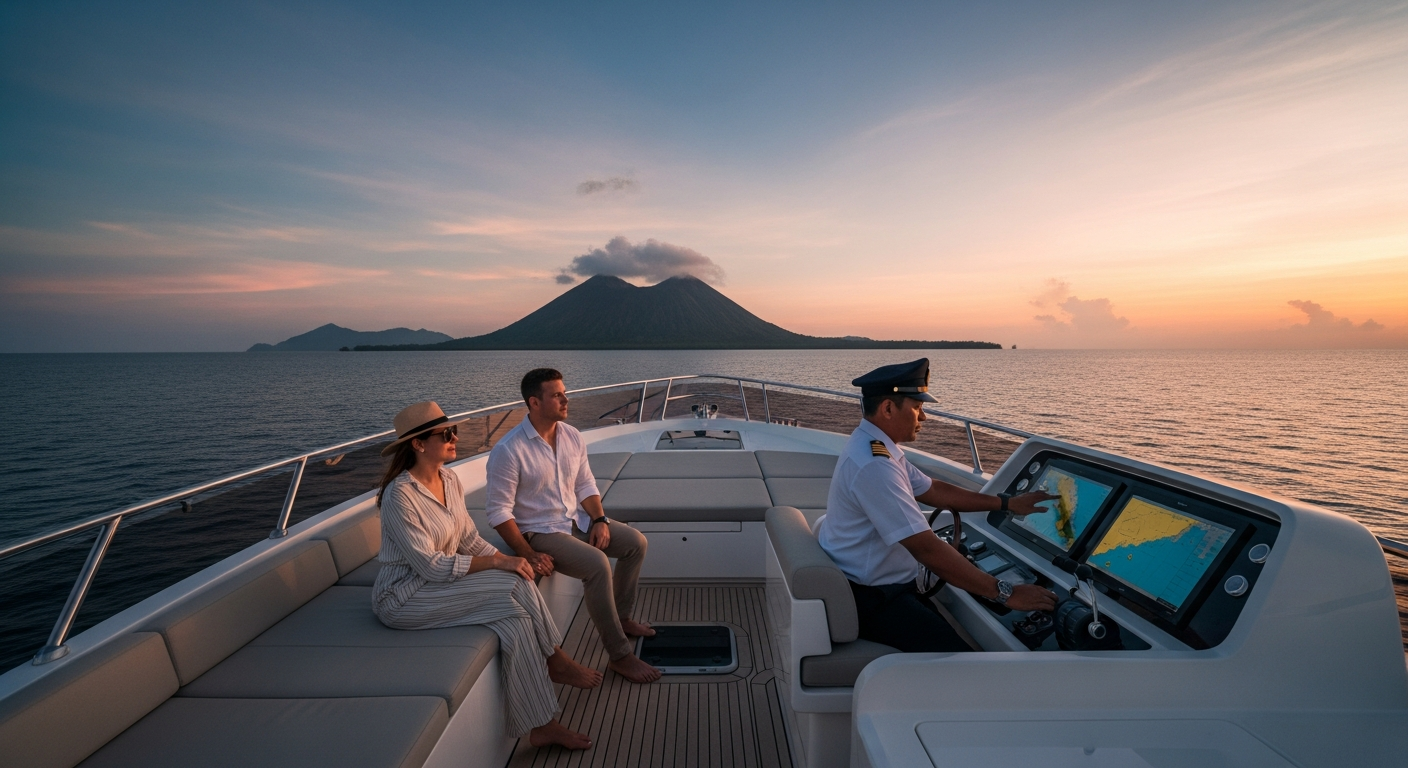
- **Komodo & Flores Sea:** May to October provides ideal visibility and wildlife encounters.
- **Raja Ampat & West Papua:** October to April experiences calmer waters due to prevailing wind patterns.
- **Banda Sea & Spice Islands:** March-April and September-November offer transition windows for pelagic migrations.
The equatorial sun warms the teak deck. A gentle breeze carries the scent of clove from distant islands, a prelude to the vast maritime world unfolding. Indonesia, an archipelago of over 17,500 islands, presents a complex seasonal mosaic, each period offering distinct advantages for a luxury cruise. Understanding these nuances ensures a voyage perfectly aligned with personal preferences, whether seeking vibrant reef ecosystems, rare wildlife encounters, or serene passage.
Navigating the Indonesian Monsoon: A General Overview
Indonesia’s climate operates on two primary seasons: the dry season and the wet season, dictated by the prevailing monsoon winds. From April to October, the southeast monsoon brings drier, cooler air from Australia, resulting in clear skies, lower humidity, and calmer seas across the southern and central regions. This period is often considered prime for an Indonesia luxury cruise, with average daytime temperatures hovering around 28-32°C. Conversely, the northwest monsoon, from November to March, carries moisture-laden air from Asia, leading to increased rainfall and higher humidity. However, “wet season” is a broad term; rainfall often manifests as intense, short bursts, typically in the late afternoon, rather than continuous downpours. Sea conditions can be choppier in some areas during this time, particularly in exposed stretches. Visibility for snorkeling and diving generally remains excellent, frequently exceeding 20 meters, even with increased cloud cover. An average annual rainfall in Jakarta reaches approximately 1,800 millimeters, illustrating the regional variations in precipitation.
The archipelago’s immense east-west stretch, approximately 5,120 kilometers, means localized weather patterns often defy a single, monolithic season. While Bali experiences its dry season, regions like Raja Ampat might be enjoying their calmest waters. This meteorological diversity permits year-round luxury cruising options. Vessel movements are meticulously planned, repositioning phinisi yachts to optimal zones throughout the calendar. For instance, a 55-meter phinisi, custom-built in 2018, often dedicates seven months to Komodo and five months to Raja Ampat. Understanding these specific regional timings is key to maximizing a private yacht expedition.
Komodo National Park and the Flores Sea: Dry Season Dominance
The Komodo National Park, a UNESCO World Heritage Site since 1991, and the surrounding Flores Sea region, find their pinnacle from May to October. During these months, the southeast monsoon ensures consistently calm waters, minimal rainfall, and abundant sunshine. This period offers superb visibility, often extending beyond 25 meters, essential for exploring the vibrant coral gardens and teeming marine life. Water temperatures remain a comfortable 26-29°C. The dry season is also prime for witnessing the Komodo dragon, *Varanus komodoensis*, in its natural habitat, as these apex predators are more active, often seen basking in the sun or hunting near watering holes on islands like Rinca and Komodo. The park spans 1,733 square kilometers, encompassing three major islands and numerous smaller islets.
Key activities during this dry window include snorkeling at Pink Beach, diving with manta rays at Manta Point, and trekking to panoramic viewpoints on Padar Island. The currents in Komodo can be strong, reaching speeds of up to 8 knots in certain channels, but experienced local guides navigate these safely, often timing dives with slack tides. Wildlife sightings extend beyond dragons and manta rays; whale sharks, dugongs, and various species of reef sharks are regularly observed. A typical Komodo luxury cruise lasts 7 to 10 days, allowing ample time to explore the diverse landscapes and underwater ecosystems. Entry fees for foreign visitors to Komodo National Park are approximately IDR 500,000 per person per day, including conservation and ranger fees. The clear skies also present remarkable stargazing opportunities, far from light pollution. More information on the park’s conservation efforts can be found on UNESCO’s official site.
Raja Ampat and West Papua: Equatorial Rains, Pristine Reefs
In stark contrast to Komodo, the optimal period for exploring Raja Ampat and West Papua stretches from October to April. This timeframe coincides with the northern hemisphere’s winter, and locally, the northwest monsoon, which paradoxically brings calmer seas to this equatorial region. While some rainfall occurs, it is typically intermittent and often contributes to the lush, green landscapes. The prevailing winds are lighter, ensuring smooth cruising conditions and excellent visibility for diving and snorkeling, often exceeding 30 meters. Water temperatures consistently hover around 28-30°C. Raja Ampat, meaning ‘Four Kings,’ refers to its four main islands: Waigeo, Batanta, Salawati, and Misool. This region is globally recognized as the epicenter of marine biodiversity, hosting over 1,500 fish species and 75% of the world’s coral species, a testament to its ecological significance.
Expeditions often focus on specific areas like Misool in the south, known for its dramatic karst topography and vibrant soft coral gardens, or Wayag in the north, famous for its iconic limestone islands. Birdwatching, particularly for the Red Bird-of-Paradise, is a popular activity, especially during the early morning hours. Liveaboard itineraries typically range from 10 to 14 days to adequately cover the vast distances and diverse sites. Permits for Raja Ampat, known as the Marine Protected Area entry tag, cost approximately IDR 1,000,000 for foreign visitors, valid for one year. The sheer scale and remoteness of Raja Ampat mean fewer vessels, offering a more exclusive experience even during peak season. The consistent warmth and calm conditions make it a favored destination for repeat luxury cruisers seeking unparalleled underwater encounters.
The Banda Sea and Spice Islands: Transition Windows for History and Marine Life
The Banda Sea, home to the fabled Spice Islands, offers two distinct and equally compelling windows for exploration: March to April and September to November. These shoulder seasons fall between the two major monsoons, characterized by relatively calm seas, clear skies, and excellent visibility. These periods are particularly significant for pelagic migrations, making them prime times for encounters with large marine species. Hammerhead sharks, often schooling in impressive numbers, are a major draw for divers during these months, especially around the outer reefs of the Banda archipelago. The water temperature during these transition periods averages 27-29°C.
Historically, the Banda Islands were the sole source of nutmeg and mace, driving centuries of global trade and colonial rivalry. A luxury cruise here combines exceptional diving with a rich historical narrative. Visits to Banda Neira reveal colonial forts like Benteng Belgica, built in 1611, and charming streets steeped in European and local history. The average transit time between specific islands in the Banda Sea can range from 4 to 8 hours, depending on the itinerary, allowing for leisurely cruising and exploration. Beyond the pelagics, the reefs support diverse macro life and healthy coral ecosystems. The serene conditions of the shoulder seasons allow for exploration of remote islands like Hatta, offering pristine beaches and untouched reefs. A typical Banda Sea expedition ranges from 8 to 12 days, often combining with routes towards Ambon or even further east.
Bali, Lombok, and Sulawesi: Year-Round Allure with Seasonal Nuances
While often associated with land-based luxury resorts, Bali and Lombok also offer exceptional cruising opportunities, primarily during their dry season from June to September. This period provides consistent sunshine, calm waters, and ideal conditions for water sports, surfing, and exploring the iconic coastlines. Average temperatures hover around 30°C, with minimal humidity. Cruise itineraries often include stops at Nusa Lembongan and the Gili Islands, known for their vibrant reefs and relaxed atmosphere. Bali itself, with its rich Hindu culture and diverse culinary scene, serves as an excellent embarkation or disembarkation point for an Indonesia luxury cruise, allowing for pre- or post-cruise land extensions. The island received over 6.2 million foreign visitors in 2019, highlighting its global appeal.
Sulawesi, a vast and geographically diverse island, presents more varied seasonal considerations. The central and southern parts, including the Tana Toraja highlands, experience a dry season from May to October, ideal for cultural excursions to witness unique funeral ceremonies and traditional stilt houses. The diving mecca of Wakatobi in Southeast Sulawesi, a marine national park, offers excellent conditions from March to December, with peak visibility during the dry months. Even during the wet season, localized microclimates mean good conditions are frequently found. The sheer size of Sulawesi, approximately 174,600 square kilometers, necessitates specific planning based on the desired region. For broader insights into Indonesian travel, consult Indonesia.travel.
The Shoulder Seasons: Unlocking Exclusive Perspectives
Beyond the definitive dry and wet season recommendations, the shoulder months present compelling advantages for the discerning traveler. These periods — typically March, April, October, and November — often bridge the peak conditions of two distinct regions, allowing for unique expedition routes that might not be feasible during the height of either monsoon. For instance, a vessel might transition from Raja Ampat to Komodo via the Banda Sea, offering a comprehensive journey through diverse ecosystems and historical sites. The weather during shoulder seasons is generally stable, with fewer crowds at popular sites, translating to a more intimate and exclusive experience. This can also lead to more competitive rates for luxury phinisi charters, with potential savings of 10-15% compared to peak season bookings.
Wildlife encounters can also be particularly rewarding during these transitional times. Certain pelagic species, like specific whale and shark populations, follow migration patterns that align with these windows. Whale shark sightings in Cenderawasih Bay, for example, are possible year-round due to local fishing practices, but conditions for visiting them can be calmer and more predictable in the shoulder months. The reduced boat traffic allows for more serene moments in secluded anchorages, enhancing the sense of private discovery. For those seeking a blend of optimal conditions without the busiest crowds, considering an Indonesia luxury cruise during these strategic shoulder periods offers an intelligent approach to archipelago exploration.
Choosing the ideal time for an Indonesia luxury cruise is a strategic decision, balancing regional conditions with personal desires. Whether drawn to the dragon-guarded shores of Komodo or the kaleidoscopic reefs of Raja Ampat, the archipelago offers a year-round calendar of unparalleled maritime experiences. Begin planning your bespoke Indonesian journey today. Discover available yachts and tailor-made itineraries by visiting indonesialuxurycruise.com to connect with our expedition specialists.